Your Results Dashboard
Explore your personalized insights
Result Overview
Genius Zone
Intuitive Catalyst
Intuition × Impact × Ambition
You vs. Others
Fun & Hobbies
Recommendations Across
Career Strategy
Understand
Explore
Decision Making
Double Down
Growth Areas
Title
Detailed analysis and insights
Welcome to Your Results
This video walks you through your personalized assessment results. You'll learn about your unique strengths, areas for growth, and how your personality profile compares to others. Take your time watching — there's a lot of valuable insight packed in.
What You'll Discover
Your top personality traits and how they shape your decision-making style
Key areas where you can double down for maximum impact in your career
Growth opportunities and actionable next steps tailored to your profile
Chart Overview
Your Notes
Chart Overview
Wow! Your scores fall into of the population where all your genius scores are very close to each other.
Flexible All-Rounder
You have a higher capacity to show up in different ways as well as empathize with a wider range of how people "be" in the world.
More Options
Very few aspects of your genius scores stand out as extremely enjoyable or unenjoyable, giving you more capacity to move in and out of each of them.
This means that very few aspects of your genius scores stand out as extremely enjoyable or unenjoyable and you have much more capacity to move in and out of each of them if necessary. This gives you more options in terms of how you show up in the world.
Basically, you're a flexible all-rounder that has a higher capacity to show up in different ways as well as empathize with a wider range of how people "be" in the world.
The real challenge for you is how to balance and decide which geniuses get to be expressed moment by moment, day by day. People with your mix of scores are more likely to struggle with "I enjoy so many things, how do I choose?" To learn more about how to navigate this based on your scores, close this tab and visit the "Decision Making" section.
Intro
The goal of the Genius Assessment is to surface the things that ENERGIZE you.
It is NOT:
- An objective measure of what you’re good at.
- An objective measure of whether you’re better or worse than someone else at something.
Scoring Legend
More enjoyment + effortless
Less enjoyment + more effortful
This genius probably *drains* you and costs you energy, rather than energizing you
Ranking against all user scores
General Genius Insights
Finding Like-Genius Peers
One of the long term visions of this work is to make it easier for people to find community and make new friends with people who operate similarly.
Finding like-minded community is one of the easiest ways to create more self-permission to operate more in your genius. Every genius would stand to benefit from having an inner circle that reflects/nurtures/supports their genius.
I would highly encourage you to share this assessment with friends you want to better understand how you align or complement those closest to you or those you work with.
Social-leaning Geniuses
If you score high on these geniuses, it's a rough proxy of how much energy/excitement you might get spending time with people.
Solitude-leaning Geniuses
If you score high on these geniuses, it's a rough proxy that you’re probably very content to spend lots of time by yourself.
Again, it's not to say these geniuses aren't skilled with people, it just means people aren't the primary way this genius gets excitement/energy. It's also not to say that these geniuses don't like people because it's common that these geniuses would welcome collaborators who synergize with their genius.
Magic in the Extremes
Most of the insight in understanding your genius comes from the highest and lowest scores.
The maximum score is 24 in this assessment.
The higher your score, the more likely you will show up in that genius, even if it’s a poor or unideal environment.
The lower your score, the more of an ideal environment you need to operate in that genius naturally and easefully.
Again, your scores are not a measure of competence, they are a measure of where you get energy/excitement from.
Sex Polarities
There are two genius pairs that seem correlated with sex based on early data.
For Women
Presence (emotion-enjoying) and Somatic (intuition-enjoying) show up 3-4x more often as the strongest genius compared to men.
For Men
Deconstructor (thinking-enjoying) and Superhuman (challenge-enjoying) show up 3-4x more often as the strongest genius compared to women.
What does this mean?
Disclaimer: By highlighting this polarity, this is not to suggest that these differences are rooted in a biological premise.
Men who lead with Presence and Somatic are rare! And women who lead with Deconstructor and Superhuman are also rare.
At the risk of reinforcing gender stereotypes, this is what the data seems to be showing.
And as the creator of this assessment, it’s helped me become more at ease and accepting of how people are, rather than continuing to expect them to be different (i.e. be more like me). When I see friends score high on the things that I score low in, it helps me understand them more and vice versa.
Presence
The essence of this genius is about how much you enjoy .
💗You scored out of 24.
z-score:
percentile:
percentile
Your scores puts you at percentile for Presence, which is in the typical range. That means that if you were one of 100 people in a room, you would get more enjoyment from than of them and less enjoyment than of them.
Understanding Presence
ExpandPresence is likely to enjoy…
- Slowing down, taking space to notice more subtle feelings
- Travel, adventure, and sensory experiences
- Emotional states of all sorts
- Experiencing complex emotions
- Simple pleasures of life (e.g. feeling the wind, seeing a great view, savoring food)
Presence tends to…
- Be especially thoughtful about the relationships in their lives (especially their inner circle)
- Be more aware of how emotions will affect people’s behavior
- Be more easily able to appreciate beauty, be in delight
- Have more affinity and appreciation for children and childlikeness
- Have the “volume knob” on their emotions turned up much higher compared to others
- Find 1-1 connection is life-giving and find group connection to be a form of emotional bliss
- Be someone that others come to for emotional support
Presence Strengths Things that this genius has a higher baseline capacity to do or learn to do at a very high level.
ExpandStrengths
- Empathy, emotional validation, emotional expression, emotional support
- Appreciation for art and expression
- Reading the room
- Designing emotionally sound or resonant experiences
- Building strong, close relationships
- Hold, recover, and eventually thrive after experiencing traumatic or difficult circumstances
Ways to Maximize Presence Strengths:
Personal Life
- Leverage this emotional menu to design how you might want to spend an evening, weekend, or holiday. You might find the frame of, "What do I want to feel?" rather than, "What do I want to do?" more resonant
- Take this course to level up your capacity to develop meaningful and connective relationships.
- Join the Genius of You Community to meet other high-scoring Presence people!
- Who most nurtures and celebrates this part of me the most? How could I spend more time with this person?
- In what contexts and situations do I feel like this part of me is appreciated and celebrated? How could I put myself in more of those situations?
- Prefer to process externally? Hop on a 1-1 processing call with the founder of Genius of You here.
Professional Life
- Look for emotionally compelling work
- Investigate careers that provide opportunities to build relationships with others, experience variety or spontaneity, or that leverage your EQ
- Do informational interviews with employees / clients / customers before joining a team OR make sure you ask about these aspects during interviews
- Prioritize environments that aren’t chronically stressful, friendly to emotional expression, and value emotional attunement
- Which colleagues, managers, or work environments have been most supportive of me in this genius?
- What are examples of work I’ve done that’s fueled by the strengths from this genius?
- What are examples of times this genius has hampered my professional progress? How could I minimize those tradeoffs in the future?
- How could I negotiate with my team or manager so that I can spend more time in this genius at work?
- Prefer to process externally? Hop on a 1-1 processing call with the founder of Genius of You here.
Presence Gaps Trade offs that might come with scoring high on this genius.
ExpandOvercommitting and Pendulum-Swinging
More likely to say, “Yes” to too many things, resulting in not having enough mental or emotional space in their life. In some cases, burning out.
On the flip-side, they might go into intense rest to recover until they are more abundant again, and then repeat this cycle.
How to Address This:
Slow down. Deliberately schedule space into your schedule to slow down and recharge as a preventative measure.
Hone your mind. Develop a meditation practice so make fewer reflexive decisions, tune into more grounded decision making, and access more capacity to say, “No.” Here’s one way to get started with a meditation practice.
Struggle with Indecision
More likely to feel torn by competing emotions or wants and as a result, expend a lot of mental and emotional energy arriving to a decision.
How to Address This:
Make a habit out of budgeting the energy you want to invest in decisions. The moment you realize you are torn about a decision, ask yourself, “How much time/energy do I want to spend making a decision on this?” Creating an internal deadline might increase your decisiveness.
Lean into your Somatic. Practice checking in with your body to make decisions. Instead of “thinking,” check in with how your body feels with each option you’re considering. If you don’t feel competent with this, you can start practicing using this beginner exercise.
Have questions about how to address these gaps in your life? Book a complimentary 1-1 with the creator of this assessment here!
Emotions Louder Than Thoughts
More likely to have trouble setting aside emotion when a situation might
require more thinking (see: Deconstructor).
More likely to be overwhelmed by the volume of emotions without
effective emotional health practices.
How to Address This:
Digest emotions more skillfully. Rather than suppressing or pushing emotion aside in order to be ‘rational’, develop your capacity to feel and move through emotions more quickly. Here’s one way you can approach it. Here’s a full course if you’re interested.
Trying to suppress emotion is unlikely to work because the “volume knob” on your emotion is much louder than for others.
Making Extreme Statements in Conflict
More likely to make extreme statements based on the emotions present during conflict. These statements might alienate others in the heat of the moment.
How to Address This:
Learn to caveat. The easiest way to both allow for your expression of emotion while also minimizing the impact of hurtful words is to put disclosures before any emotional expression like these:
-
“Right now, I feel…”
-
“At this moment, I notice the feeling…”
-
“There’s a big part of me that’s saying…”
Those kinds of phrases help to A) signal that you are merely voicing what the emotion is saying and not necessarily what you actually believe intellectually and B) explicitly noting the fleeting nature of what you feel and that you may feel differently later.
Presence Compatibility
ExpandPresence tends to be fascinated by Alchemists’ breadth of curiosity and Alchemists tend to be curious with a wide range of people
Presence tends to appreciate what Artisans' creative expression might evoke and Artisans may find Presence’s emotional expression a way to inspire more creativity
If you score low on Presence…
ExpandIf you score low on this genius, it just means that you get less enjoyment here compared to your other geniuses.
With that in mind, there are 3 things you can do if you are low on this genius:
Develop Your Presence:
- Take this course to level up your Presence game in the context of your relationships
Understand Presence:
- Read through the "Strengths" section for this genius and ask yourself:
- In what ways have I overlooked people who score high on this genius?
- What can I appreciate about the strengths of this genius?
- What’s a small way I can tap into this genius more that would enrich my life (professionally, romantically, platonically, or personally)?
- Talk to people who have this genius among their strongest (share this as sessment with friends/colleagues using the link at the top of this page) and ask them:
- What about this genius is so enjoyable to you?
- What are some examples of some of your favorite moments related to this genius?
- How does it serve you or enrich your life?
- How did you develop and nurture this genius over the years?
- Join the Genius of You Community to chat with and learn from high-scoring Presence people!
Partner & Collaborate with Presence:
- You might have a friend who scores high on Presence and not even know it! Send them this link and they can take the Genius assessment for free.
- Join the Genius of You Community to meet high-scoring Presence people who are open to collaborating or partnering.
Somatic
The essence of this genius is about how much you enjoy .
🧘♀️You scored out of 24.
z-score:
percentile:
percentile
Your scores puts you at percentile for Somatic, which is in the typical range. That means that if you were one of 100 people in a room, you would get more enjoyment from than of them and less enjoyment than of them.
Understanding Somatic
ExpandSomatics are likely to enjoy…
- Having practices that allows them to hone, tune in, and listen to their body
- Having infinite autonomy to do what feels intuitively right in the moment
- Seeing synchronicity and magic unfold as a result of following their intuitive sense
- Not thinking too vigorously all the time (unless Deconstructor is also strong)
Somatics tend to…
- Have a deep, unspoken social confidence (even when they were young)
- Resonate with acts of courage, people who have courage, and want to develop that within themselves
- Make decisions big or small based on what their gut is telling them (They might say things like, “It just feels right” or, “I just know”)
- Be much more comfortable with navigating change or being in chaos
- Crave autonomy and freedom to follow the leadings of their intuition
- Be more particular than others about who they spend time with, how time is spent, etc
- Read people and situations by their feel or energy
- Meet the right person at the right time
- Notice their internal “No’s” and boundaries more easily
Somatic Strengths Things that this genius has a higher baseline capacity to do or learn to do at a very high level.
ExpandStrengths
- Having a 6th sense about things
- Building relationships quickly
- Learn things quickly (especially it’s something that can be learned by following someone’s example)
- Spirituality, mystical, or paranormal experiences
- Setting boundaries
Ways to Maximize Somatic Strengths:
Personal Life
- Create self-permissioning to not always need to explain your Somatic sense to others, embrace that others just might not “get” it unless they experience the way you live life
- Check out this book on intuition
- Join the Genius of You Community to meet and learn from other high-scoring Somatics!
- We’re in the process of building a course for people who want to level-up their Somatic. You can get on the beta list here.
- When has my Somatic sense served me the most?
- Who most nurtures and celebrates this part of me the most? How could I spend more time with this person?
- In what contexts and situations do I feel like this part of me is appreciated and celebrated? How could I put myself in more of those situations?
- What are the ways in which I’ve grown the most? What are the skills/domains I’m most fluent in? How could I help others in those same arenas?
- Prefer to process externally? Hop on a 1-1 processing call with the founder of Genius of You here.
Professional Life
- Look for work that gives you a lot of autonomy to follow your intuitive sense
- Having a Somatic-friendly manager (share this results page with your manager if that feels right)
- A career that inherently gives you a lot of autonomy (real estate, sales, firefighting, entrepreneurship)
- A form of work that is Somatic-friendly (fitness and health, movement-oriented work, outdoor work, spirituality)
- Trust your intuition fully drive how you make career decisions no matter how different it looks (only ~7% of the population have Somatic as their highest genius, so it’s highly likely your path won’t look like most others)
- Prioritize environments that enable you to learn by following others’ examples
- Which colleagues, managers, or work environments have been most supportive of me in this genius?
- What are examples of work I’ve done that’s fueled by the strengths from this genius?
- What are examples of times this genius has hampered my professional progress? How could I minimize those tradeoffs in the future?
- How could I negotiate with my team or manager so that I can spend more time in this genius at work?
- Prefer to process externally? Hop on a 1-1 processing call with the founder of Genius of You here.
Somatic Gaps Trade offs that might come with scoring high on this genius.
ExpandPhysical Symptoms from Ignoring Somatic Signals
More likely to experience various forms of physical discomfort if they ignore their somatic sense. In some cases, getting sick or developing chronic issues if they ignore it for too long.
How to Address This:
Slow down. Take time to examine what you are ignoring. Ask yourself, “What is my body telling me? What needs to be shifted in my life?” and listen to the response that comes up.
Struggle with Words
More likely to struggle with words to describe what is being sensed Somatically (unless high on Deconstructor) or having crisp explanations behind their Somatic-driven decision making.
How to Address This:
Partner with other geniuses. Surround yourself with empathetic Deconstructor – they tend to be more skilled with words and enjoy it too!
Practice. Slow down, develop a journaling practice work on articulating what’s happening internally for you.
Have questions about how to address these gaps in your life? Book a complimentary 1-1 with the creator of this assessment here!
Dealing with Doubters
More likely to have people around that doubt their Somatic sense when it comes to decision making.
How to Address This:
Develop a people-filter. Put some thought into who you allow into your inner circle, are the people who doubt you:
-
People who understand you and your Somatic genius well?
-
People who are living a life that you want *at an intuitive level*?
Find believers. Find people who understand your genius, support it, nurture it, and celebrate it. Join the Genius of You Community to meet and learn from other high-scoring Somatics!
Few Who Understand
More likely to have fewer people in their life who “get” their way of being.
How to Address This:
Reset expectations. Understand that people who have Somatic as their highest genius are the rarest group of people (only ~7% of the population), so fundamentally, there are fewer people overall who operate like this.
Find peers. Join the Genius of You Community to meet people with the same mix of geniuses as you!
Enlighten those around you. Use your public results link (find it at the top of the page) to share your results with those close to you so they might better understand what makes you tick.
Incompatibility in Corporate Environments
More likely to struggle to find a place conducive or supportive of their genius in the workplace (less likely if Deconstructor or Superhuman is high).
How to Address This:
Look for Somatic leaders. Women are 3-4x more likely than men to have Somatic as their strongest genius. Consider looking for companies founded by women or where you might be managed by a woman.
Become a leader. Many Somatics strike out on their own and make their own way. Honing and trusting your intuition is a pretty solid bet if you have the courage to do so.
Somatic Compatibility
ExpandBut on a broad level, below are some rough characteristics that Somatics are more inclined to get along with. People who are:
- Friendly, open, supportive of the Somatic’s way of being
- Curious and accepting
- Well intentioned
- High integrity
If you score low on Somatic…
ExpandIf you score low on this genius, it just means that you get less enjoyment here compared to your other geniuses.
With that in mind, there are 3 things you can do if you are low on this genius:
Develop Your Somatic:
- Check out this exercise on developing your Somatic
- Check out this book on developing intuition
- We’re in the process of building a course for people who want to level-up their Somatic. You can get on the beta list here.
Understand Somatics:
- Read through the "Strengths" section for this genius and ask yourself:
- In what ways have I overlooked people who score high on this genius?
- What can I appreciate about the strengths of this genius?
- What’s a small way I can tap into this genius more that would enrich my life (professionally, romantically, platonically, or personally)?
- Talk to people who have this genius among their strongest (share this assessment with friends/colleagues using the link at the top of this page) and ask them:
- What about this genius is so enjoyable to you?
- What are some examples of some of your favorite moments related to this genius?
- How does it serve you or enrich your life?
- How did you develop and nurture this genius over the years?
- Join the Genius of You Community to chat with and learn from high-scoring Somatics!
Partner & Collaborate with Somatics:
- You might have a friend who scores high on Somatic and not even know it! Send them this link and they can take the Genius assessment for free.
- Join the Genius of You Community to meet high-scoring Somatics who are open to collaborating or partnering.
Coach
The essence of this genius is about how much you enjoy .
🤝You scored out of 24.
z-score:
percentile:
percentile
Your scores puts you at percentile for Coach, which is in the typical range. That means that if you were one of 100 people in a room, you would get more enjoyment from than of them and less enjoyment than of them.
Understanding Coach
ExpandCoaches are likely to enjoy…
- Directly hearing/seeing the impact they have had on someone
- Doing random acts of kindness
- Proactively thinking about how you can support others
- Mentoring, coaching, teaching, or helping others
Coaches tend to…
- Help people with homework (when they were in school)
- Anticipate the needs of others
- Do hidden labor behind the scenes that few notice
- Go out of their way to support people in their life
- Spend the majority of their time, attention, or energy helping those around them or those who are in most need
Coach Strengths Things that this genius has a higher baseline capacity to do or learn to do at a very high level.
ExpandStrengths
- Proactively supporting others in a variety of ways
- Keeping others in mind
- Altruism
- Intrinsically motivated to help others
- Desire to see others thrive, succeed, flourish
Ways to Maximize Coach Strengths:
Personal Life
- Hone your soft skills. This will augment your ability to make an impact on others, better understand the needs of others, and also make an impact in group contexts.
- Skills like persuasion, influence, leadership, management, sales, public speaking, active listening, and conflict management would fall in this category
- Develop self-care practices to make sure that your cup is regularly filled so that you have more capacity to give to others (physical, emotional, mental, spiritual, financial)
- Read Give and Take by Adam Grant
- Join local organizations dedicated to help the less fortunate. Look up a non-profit near you (USA only).
- Join the Genius of You Community to meet and learn from other high-scoring Coaches!
- Who also reflects this part of me back to me? How could I spend more time with this person?
- In what contexts and situations do I feel like this part of me is appreciated and celebrated? How could I put myself in more of those situations?
- Is there a pattern in the way that I like to support others? Is it around a common challenge? Does it tap into a common expertise or skill I have?
- Prefer to process externally? Hop on a 1-1 processing call with the founder of Genius of You here.
Professional Life
- Look for roles that primarily revolve around helping customers directly (Customer success, bartending, retail, client-facing jobs, consulting, support roles, concierge) or colleagues (HR, enablement, assistant, management, leadership roles)
- Look for a mentor who embodies values that you resonate with or has a career you resonate with and seek their guidance. Here’s a brief primer on how to find a mentor.
- Read Give and Take by Adam Grant to learn about how givers can become the most successful professionally or watch Adam’s TED Talk as a primer
- Which colleagues, managers, or work environments have been most supportive of me in this genius?
- What are examples of work I’ve done that’s fueled by the strengths from this genius?
- What are examples of times this genius has hampered my professional progress? How could I minimize those tradeoffs in the future?
- How could I negotiate with my team or manager so that I can spend more time in this genius at work?
- Prefer to process externally? Hop on a 1-1 processing call with the founder of Genius of You here.
Coach Gaps Trade offs that might come with scoring high on this genius.
ExpandPreventing Others’ Failures
More likely (out of good and pure intentions) to want to fully prevent people around them from experiencing failure (big or small) in fear that they will traumatize, set back, or break them permanently.
How to Address This:
Understand the tradeoffs. Trying to prevent someone from failing is almost like trying to make sure someone never falls off a bike. It’s a well-intended desire but might prevent someone from actually learning how to bike as well as deprive them opportunities to develop internal resolve, grit, and persistence. Ask yourself, is the goal to prevent all pain in their life? Or is the goal to help them develop their abilities so they can stand on their own feet? Which is more important to you?
Delaying the inevitable. Regardless of whether someone is your closest friend, sibling, or child, you can’t permanently build a bubble of protection for them forever. At some point, they will have to fly on their own and when this happens, you will experience some form of grief. Consciously letting go of the need to overly protect might be a more resonant choice than to wait until circumstances demand that you let go.
Reframe. Instead of preventing any failure or pain, try to guarantee that you are a safe space for them to process the aftermath. That way you can be there to help them develop healthy coping mechanisms and process their failure in a way that builds their sense of self-efficacy, resolve, and tenacity.
Giving Unsolicited Advice
More likely (out of good and pure intentions) to share feedback, advice, or guidance without it being asked for.
How to Address This:
Understand the fundamentals of influence. You can only influence people as much as they have value for you. So in contexts where someone deeply values your perspective, giving unsolicited advice will probably land well. But if someone doesn’t value your perspective, the advice will likely fall on deaf ears. In the worst cases, they will lose respect for you.
Ask explicitly if someone wants advice. This is generally communication best practice. Some examples:
-
“Are you looking for advice on this topic?”
-
“Would you be open to hearing my advice on this?”
-
“I have some best practices on this, would you like for me to share?”
Offer to share your experience, rather than “advice.” It’s generally more socially acceptable to share unsolicited experiences than advice. As an example:
| Sharing Advice | Sharing Experience | |
|---|---|---|
| Losing Weight | “You know, the best way to lose weight is doing intermittent fasting!” | “I lost about 20 lbs (9 kg) last year by doing intermittent fasting!” |
| Making Money | “If you want to make some good money, you should get into stocks or real estate.” | “I dabbled in some real estate over the last year and made about $10,000 on the side.” |
| Gaining Muscle | “If you want to bulk up, you should be hitting the gym at least 3 hours, 3 times a week.” | “I got into the best physical and aesthetic shape of my life by going to the gym 3 times a week for at least 3 hours.” |
Burnout from Overgiving
More likely to neglect their own self care and personal priorities because they are occupied by the joy and fulfillment in supporting others.
How to Address This:
Clarify your values. Develop a core value, philosophy, or personal boundary around the importance of “giving out of overflow” or “putting on your life jacket first.”
Monitor your wellbeing. Develop a reflection process or rhythm to help you notice when you might be slipping into over-extended territory. If you’re overstretched, unwell, or under-resourced, it will be much harder to be as effective in supporting those around you.
Have questions about how to address these gaps in your life? Book a complimentary 1-1 with the creator of this assessment here!
Feeling Underappreciated
More likely to feel unseen, underappreciated with how much they give that flies under the radar.
How to Address This:
Make requests. Share with others what it would mean to you to have your giving more explicitly appreciated, it’s very possible that they are unaware how you are feeling if this is the case for you.
Accept others’ baselines. If people in your life don’t actively appreciate or acknowledge your giving, it’s more likely that will continue to be the case than not. Instead, devote more of your energy towards people who do see and make the effort to appreciate your giving!
Find your tribe. Other people who score high on Coach are more likely to notice and acknowledge your giving because they do it themselves as well. Join the Genius of You Community to meet other high-scoring Coaches!
Being Taken Advantage Of
More likely to get taken advantage of by others because of their giving nature, especially if they haven’t learned to set boundaries or be discerning about who they help.
How to Address This:
Create filters. Put some thought into who you allow into your life, or add some light structure in determining who you help:
-
Do they reciprocate when you offer them help? Or do they just keep receiving and not offer to help you back?
-
Are there any criteria that you want to establish first before offering your time and energy to this person?
-
Clarifying internally, “If someone demonstrates XYZ behavior, that’s my signal to pause my offers for support.”
Find like-minded people. People who also score high on Coach are more likely to reciprocate, support and celebrate this genius. Join the Genius of You Community to meet other high-scoring Coaches!
Coach Compatibility
ExpandAs a fundamental premise, most people operate through the lens of “What’s in it for me?” and people who score high on Coach have more natural inclination to answer that unspoken question.
If you score low on Coach...
ExpandIf you score low on this genius, it just means that you get less enjoyment here compared to your other geniuses.
With that in mind, there are 3 things you can do if you are low on this genius:
Develop Your Coach:
- Check out this talk from Simon Sinek about the intersection of the Coach genius and life fulfillment
- Check out this talk from Adam Grant about the intersection of the Coach genius and what the most successful people on the planet do
Understand Coaches:
- Read through the "Strengths" section for this genius and ask yourself:
- In what ways have I overlooked people who score high on this genius?
- What can I appreciate about the strengths of this genius?
- What’s a small way I can tap into this genius more that would enrich my life (professionally, romantically, platonically, or personally)?
- Talk to people who have this genius among their strongest (share this assessment with friends/colleagues using the link at the top of this page) and ask them:
- What about this genius is so enjoyable to you?
- What are some examples of some of your favorite moments related to this genius?
- How does it serve you or enrich your life?
- How did you develop and nurture this genius over the years?
- Join the Genius of You Community to chat with and learn from high-scoring Coaches!
Partner & Collaborate with Coaches:
- You might have a friend who scores high on Coach and not even know it! Send them this link and they can take the Genius assessment for free.
- Join the Genius of You Community to meet high-scoring Coaches who are open to collaborating or partnering.
Alchemist
The essence of this genius is about how much you enjoy .
📚You scored out of 24.
z-score:
percentile:
percentile
Your scores puts you at percentile for Alchemist, which is in the typical range. That means that if you were one of 100 people in a room, you would get more enjoyment from than of them and less enjoyment than of them.
Understanding Alchemist
ExpandAlchemists are likely to enjoy…
- Taking space to wonder and be curious
- Collecting bits of trivia
- Exposing themselves to skills that might not have direct professional consequences
- Meeting a wide range of people from different backgrounds
Alchemists tend to…
- Dabble, rather than commit deeply
- Have curiosities that wander outside traditional boxes or norms
- Have a wide range of seemingly unrelated knowledge/experiences
- Not need a rigorous reason as to why they're interested in something
- Get lost in curiosity or learning wormholes (e.g. Wikipedia, YouTube)
- Have people around them who are confused by their wide range of interests or tell them to “just focus”
- Likely to be interested in investigating their lower-scoring geniuses
Alchemist Strengths Things that this genius has a higher baseline capacity to do or learn to do at a very high level.
ExpandStrengths
- Curiosity
- Exposure to a wide range of ideas, concepts, life experiences, or kinds of people
- Interest in esoteric subjects
- Tolerance and patience for things off the beaten path
- Intrinsic motivation to learn
Ways to Maximize Alchemist Strengths:
Personal Life
- Create an inventory of topics/skills/activities/etc that have captured your interest up to this point – here’s a worksheet to help with this
- This makes it much easier to come up with ways combine skills with each other as well as decide which to prioritize
- Actively build in time into your schedule to wander, explore, and follow your curiosity on a regular basis
- Join the Genius of You Community to meet and learn from other high-scoring Alchemists!
- Who also reflects this part of me back to me? Or, who encourages me even more to spend time in this genius? How could I spend more time with this person?
- In what contexts and situations do I feel like this part of me is appreciated and celebrated? How could I put myself in more of those situations?
- Is there a specific topic or skill that’s been able to capture my attention in the long term? What’s different or unique about it?
- Prefer to process externally? Hop on a 1-1 processing call with the founder of Genius of You here.
Professional Life
- Look for roles that give you exposure to forms of breadth/variety that are compelling:
- Humans (service work, education, real estate, nonprofit, medicine/health)
- Skills (operations, cross-functional roles)
- Tools (companies with a culture of innovation and experimentation)
- Industries (venture capital, philanthropy, lending)
- Embrace the generalist path, follow your curiosity, get good at reinventing yourself
- Which colleagues, managers, or work environments have been most supportive of me in this genius?
- What are examples of work I’ve done that’s fueled by the strengths from this genius?
- What are examples of times this genius has hampered my professional progress? How could I minimize those tradeoffs in the future?
- How could I negotiate with my team or manager so that I can spend more time in this genius at work?
- Prefer to process externally? Hop on a 1-1 processing call with the founder of Genius of You here.
Alchemist Gaps Trade offs that might come with scoring high on this genius.
ExpandStarting but not Finishing
More likely to start things, but perhaps not into completion for a variety of reasons.
How to Address This:
Reframe. Understand this is only a ‘negative’ based on your frame of reference. Consider reframing this trade off:
-
“I’m sampling things until I come across something that I want to actually stick with.”
-
“I’m willing to cut my losses and stop putting attention on things when I lose interest.”
-
“I’m developing self awareness around what actually captures my engagement.”
Leverage social accountability. For some people, they are more likely to see something to completion if there are others expecting it to be completed. Here’s an article explaining how to leverage this to get 2-3x more done.
Paradox of Choice
More likely to consider a wide range of options in any given aspect of life (e.g. values, careers, relationships, friendships, hobbies) and struggle with arriving to a decision about them.
How to Address This:
Most decisions are reversible. You can make new friends, you can walk away from old ones. You can try a career and then try a different one. You can enter into a relationship and realize that it’s not what you want. This comic might help you feel more comfortable trying and switching in any domain of your life.
Strive to be “less wrong” instead of “right”. People often feel like they have to make the most optimized, accurate, or “correct” choice when it comes to big life decisions. This often leads to paralysis by analysis. The reality is that postponing your decision is a decision and often, it’s the worst decision. It’s often better to make a decision, gather new information about your decision, and then modify your course as you learn more. The more modifications you make, the “less wrong” you’ll be over time.
Have questions about how to address these gaps in your life? Book a complimentary 1-1 with the creator of this assessment here!
Curiosity Backlog
More likely to build up an ever-growing backlog of things to explore.
How to Address This:
Increase your capacity to explore your interests:
-
Create a system. Create a repeatable process to help you organize threads of curiosity you haven’t gotten to yet. Log it in a spreadsheet, put it in a note taking software, use an extension like Pocket. This can make it easier for you to revisit when you have time.
-
Schedule
dedicated time. And increase the likelihood you
stick to the scheduled time by inviting a friend to hold you
accountable. For example:
-
If your problem is having too many tabs open that you plan to check later, then once a week, schedule time with a friend where you spend 20-30 minutes going through those tabs
-
If your problem is you never seem to have time to go back to revisit that old project, block out time during an upcoming weekend and tell a friend to ask and make sure you do it.
-
-
Pay yourself first. Investigate curiosities when you have the most energy, rather than leaving yourself “energy scraps” at the end of the day. Use something like this energy tracker to help diagnose what gives you energy and what saps it.
-
Reduce distractions. Lock away your phone for a few days. Get a dumbphone. Go on a retreat. Go somewhere without good cell reception or wifi. Move somewhere remote. Go on a digital fast. Get software to block certain sites during certain times of the day. Clean your room or desk. Figure out what increases your distractibility and devise ways to avoid them.
Reduce the number of things that you will pursue:
-
Reset your expectations. It is often said that “Happiness = Expectations - Reality” so if you continue to expect yourself to follow all your threads of curiosity when your reality continually suggests that you cannot, this will be a recipe for frustration. If you adjust your expectations closer to your reality, you will minimize this downside of frustration.
-
Define a North Star. Get clear on big non-negotiables in terms of how you want to steer your life. This can help you make tie-breaker decisions.
-
Learn to let go. In letting go of that thread of curiosity, there is some part of you that will experience grief, however small. Developing a relationship with grief in this context might make it easier for you to let go more easily in the long run. Here’s an article about grief and letting go.
Alchemist Compatibility
ExpandIf you score low on Alchemist…
ExpandIf you score low on this genius, it just means that you get less enjoyment here compared to your other geniuses.
With that in mind, there are 3 things you can do if you are low on this genius:
Develop Your Alchemist:
- Check out this resource to develop your Alchemist genius
Understand Alchemist:
- Read through the "Strengths" section for this genius and ask yourself:
- In what ways have I overlooked people who score high on this genius?
- What can I appreciate about the strengths of this genius?
- What’s a small way I can tap into this genius more that would enrich my life (professionally, romantically, platonically, or personally)?
- Talk to people who have this genius among their strongest (share this assessment with friends/colleagues using the link at the top of this page) and ask them:
- What about this genius is so enjoyable to you?
- What are some examples of some of your favorite moments related to this genius?
- How does it serve you or enrich your life?
- How did you develop and nurture this genius over the years?
- Join the Genius of You Community to chat with and learn from high-scoring Alchemists!
Partner & Collaborate with Alchemists:
- You might have a friend who scores high on Alchemist and not even know it! Send them this link and they can take the Genius assessment for free.
- Join the Genius of You Community to meet high-scoring Alchemists who are open to collaborating or partnering.
Superhuman
The essence of this genius is about how much you enjoy .
🚀You scored out of 24.
z-score:
percentile:
percentile
Your scores puts you at percentile for Superhuman, which is in the typical range. That means that if you were one of 100 people in a room, you would get more enjoyment from than of them and less enjoyment than of them.
Understanding Superhuman
ExpandSuperhumans are likely to enjoy…
- Doing hard things that others might avoid
- 30 day challenges
- Signing up for ambitious goals
- Figuring out how to get their lower-scoring geniuses to be higher
- When they “unlock" a new level of ability, execution, thinking, being, etc
Superhumans tend to…
- Get bothered by others' incompetence more quickly than others
- Have a more focused skill set and depth of mastery compared to most
- Have high amounts of tenacity or determination
- Having high expectations of themselves
- Have people around them that are concerned about how much or how often they push themselves
- Do well under pressure
- Start itching for a new challenge after taking too long of a break
- Voluntarily sign up for things most others would avoid:
- Pushing physical limits
- Chasing after brutally honest feedback
- Volunteering for a very hard work project
- Starting a company
- Want to be the best at something even when just starting out
Superhuman Strengths Things that this genius has a higher baseline capacity to do or learn to do at a very high level.
ExpandStrengths
- Tolerance and tenacity in the midst of difficult challenges
- Pain tolerance (could be mental, emotional, or physical – varies with each person)
- Pushing thing to new heights and levels
- Belief in what is possible
- Incorporating constructive feedback
- Thrive under pressure
Ways to Maximize Superhuman Strengths:
Personal Life
- Refer to this menu of different Superhuman possibilities to pursue
- Ideate with a Deconstructor about the different goals and challenges you could pursue and the most efficient ways to do so.
- Go on Superhuman “adventures” with other Superhumans by joining the Genius of You Community to meet other high-scoring Superhumans!
- Who also reflects this part of me back to me? Or, who encourages me even more to spend time in this genius? How could I spend more time with this person?
- In what contexts and situations do I feel like this part of me is appreciated and celebrated? How could I put myself in more of those situations?
- Name the core skills or domains of knowledge you experience the most enjoyment while using/doing.
- Come up with as many different ways you can apply these skills in different contexts in your life
- Think about different ways you can actively push the limits with these skills even further (e.g. taking a class, private lessons, signing up for a challenge)
Professional Life
- Look for roles that are just a little bit beyond your level of experience
- Find a mentor or someone you respect that you can study, learn from, or be mentored by. Here’s a brief primer on how to find a mentor
- Look for environments that incentivize you to work at your best and challenge you (this could be role based, manager based, company based, or industry based)
- Consider careers that have more demanding or arduous paths:
- Mental (Startup environments, Law, Management Consulting, Investment Banking)
- Skills (operations, cross-functional roles)
- Emotional (Social Work, Therapy, EMT, ER)
- Physical (Military, Firefighter, Carpentry, Landscaping, Farming, Professional Sports)
- Which colleagues, managers, or work environments have been most supportive of me in this genius?
- What are examples of work I’ve done that’s fueled by the strengths from this genius?
- What are examples of times this genius has hampered my professional progress? How could I minimize those tradeoffs in the future?
- How could I negotiate with my team or manager so that I can spend more time in this genius at work?
- Prefer to process externally? Hop on a 1-1 processing call with the founder of Genius of You here.
Superhuman Gaps Trade offs that might come with scoring high on this genius.
ExpandHyperfocus
More likely to overly focus in certain areas of life at the expense of other aspects.
How to Address This:
Be intentional. Hyperfocus isn’t inherently a ‘bad’ thing, it’s more a question of whether you are conscious and aware of the tradeoffs you are making or just mindlessly letting it happen.
Regularly re-evaluate. Build a practice where you ‘inventory’ or take stock of how your time, attention, or energy are being spent. Some examples of how to do this:
-
Journal once every two weeks for 30 minutes about where your attention and energy are going (Where am I spending my time? Does that fit with what I am really wanting right now? Where might I want to redirect some attention?)
-
Audit your energy using a log like this.
-
Meet with a coach, mentor, advisor, or therapist on a regular basis about this if you do better as an external processor
-
Take regular walks (or other low-grade physical activity) and ‘zoom out’ from your life and examine the “pieces” on your metaphorical table and see if there are things you want to move around
Have questions about how to address these gaps in your life? Book a complimentary 1-1 with the creator of this assessment here!
Few Who Understand
More likely to have fewer people in their life who “get” their way of being.
How to Address This:
Reset expectations. Understand that people who have Superhuman as their highest genius are one of the rarest groups of people (only 9-10% of the population), so fundamentally, there are fewer people overall who operate like this.
Find peers. Join the Genius of You Community to meet people with the same mix of geniuses as you!
Enlighten those around you. Use your public link to share your results with those close to you so they might better understand what makes you tick.
Being Perceived as “Extreme”
More likely for others to perceive you as “extreme” in terms of your focus or intensity.
How to Address This:
Calibrate based on how people respond. Take a more cautious approach and incrementally show more of your true colors the more you get a sense that someone might find your Superhuman-ness to be “too much.”
-
For example, if you’re very into a particular sport, you could ask, “Do you play any sports? What do you think about <your sport>?” and their responses will give you a sense of where they stand. You can apply this with any domain you’re really interested in.
-
Here’s an article that breaks down conversational mechanics similar to this – scroll down to the section called “Tools to Make Conversations More Personal”
Reset expectations. Keep in mind, this is part of life! No matter how you show up in the world, even if you show up perfectly (if that even exists), there will always be someone that might be put off by you – so it’s sensible to expect that some people won’t get along with you
-
Note: Most people don’t get the same amount of enjoyment from this genius (only 9-10% of the population have Superhuman as their highest genius). This may help temper your expectations.
Impatience Pre-Mastery
More likely to get frustrated during the early stages of mastery when less skilled.
How to Address This:
Examine your expectations. Understand that becoming top 1% in a field, craft, or skill can take 7-10 years. Here is an article that outlines this. The more your expectations match reality, the less frustration you will feel. That said, given your hyperfocus capacities, it’s more likely that you will excel and learn faster than most!
Superhuman Compatibility
ExpandPresence tends to be able to empathize with the satisfaction of reaching new heights. Both can appreciate being present to single-minded focus.
Deconstructor tend to want to understand the mechanics or journey of mastery a Superhuman might have taken. Superhuman can benefit from the insights from a Deconstructor to supercharge their own progress.
If you score low on Superhuman…
ExpandIf you score low on this genius, it just means that you get less enjoyment here compared to your other geniuses.
With that in mind, there are 3 things you can do if you are low on this genius:
Develop Your Superhuman:
- Check out this resource to help develop your Superhuman genius
Understand Superhuman:
- Read through the "Strengths" section for this genius and ask yourself:
- In what ways have I overlooked people who score high on this genius?
- What can I appreciate about the strengths of this genius?
- What’s a small way I can tap into this genius more that would enrich my life (professionally, romantically, platonically, or personally)?
- Talk to people who have this genius among their strongest (share this assessment with friends/colleagues using the link at the top of this page) and asking them:
- What about this genius is so enjoyable to you?
- What are some examples of some of your favorite moments related to this genius?
- How does it serve you or enrich your life?
- How did you develop and nurture this genius over the years?
- Join the Genius of You Community to chat with and learn from high-scoring Superhumans!
Partner & Collaborate with Superhumans:
- You might have a friend who scores high on Superhuman and not even know it! Send them this link and they can take the Genius assessment for free.
- Join the Genius of You Community to meet high-scoring Superhumans who are open to collaborating or partnering.
Artisan
The essence of this genius is about how much you enjoy .
🎨You scored out of 24.
z-score:
percentile:
percentile
Your scores puts you at percentile for Artisan, which is in the typical range. That means that if you were one of 100 people in a room, you would get more enjoyment from than of them and less enjoyment than of them.
Understanding Artisan
ExpandArtisans are likely to enjoy…
- Having end-to-end creative autonomy
- Having a variety of spaces to fully express themselves
- Having environments to express themselves while being free from logistical or operational burdens
- Getting lost in the flow of expressing of the essence of a creative vision
Artisans tend to…
- Have high creative output, time/space permitting
- Have a very high bar for creative partnership, otherwise generally operates solo in creative spaces
- Put a lot of deliberate thought or craftsmanship into gifts
- Really enjoy when something they're working on finally "comes together"
- Be more likely to operate on a “Maker’s Schedule” rather than a “Manager’s Schedule”
- Crave creative autonomy to incubate ideas and work towards a vision they want to express
- Feel creatively constipated or lack of purpose/meaning if they’re not able to express creatively frequently enough
- Get deeply engrossed while working on a creative project
Artisan Strengths Things that this genius has a higher baseline capacity to do or learn to do at a very high level.
ExpandStrengths
- Thorough execution when creatively aligned
- See creative twists, remixes, and possibilities regularly
- High output when given the right support or high creative autonomy
Ways to Maximize Artisan Strengths:
Personal Life
- Develop a system, habit, or process to capture inspiration if you're not able to act on it quickly so you're never lacking inspiration. Leverage a note-taking app on your phone, sticky notes, or an equivalent.
- Regularly block out evenings or weekends with no plans other than to give yourself space to do Artisan-oriented activities.
- Join the Genius of You Community to meet, learn, or collaborate with other high-scoring Artisans!
- Go through this reflection exercise to find out what consistently gets your creative juices moving.
- Who also reflects this part of me back to me? Or, who encourages me even more to spend time in this genius?
- In what contexts and situations do I feel like this part of me is appreciated and celebrated? How could I put myself in more of those situations?
- Prefer to process externally? Hop on a 1-1 processing call with the founder of Genius of You here.
Professional Life
- Look for roles that give you high amounts of autonomy when it comes to execution.
- If you are early in your career, realistically, it will be hard to find this unless you are extremely lucky or connected. It’s a bit easier to A) find a manager you respect at a company you respect or B) find a job that isn’t overly stressful or toxic, and then do things on the side until you have enough of a portfolio to be able to negotiate more autonomy down the road.
- Look for roles that have a creative component built into it (marketing, design, curriculum design, content development, entertainment, art)
- Look for agency versions of the above (e.g. marketing agencies, design agencies, content agencies)
- Look for environments that straddle a good balance between creative freedom and concrete timelines (this could be role based, manager based, or company based, but manager has the greatest effect here)
- You could have a dream role at your dream company, but if you have a terrible manager, it could ruin it for you. But if you have a fantastic manager at a mediocre company or mediocre role, you will probably fare better.
- Which colleagues, managers, or work environments have been most supportive of me in this genius?
- What are examples of work I’ve done that’s fueled by the strengths from this genius?
- What are examples of times this genius has hampered my professional progress? How could I minimize those tradeoffs in the future?
- How could I negotiate with my team or manager so that I can spend more time in this genius at work?
- Prefer to process externally? Hop on a 1-1 processing call with the founder of Genius of You here.
Artisan Gaps Trade offs that might come with scoring high on this genius.
ExpandStruggle with Logistical/Operational Tasks
More likely to struggle to consistently complete logistical or operational tasks.
How to Address This:
Leverage social accountability. For some people, they are more likely to complete a task if there are others expecting it to be completed. Here’s an article explaining how to leverage this to get 2-3x more done.
Negotiate your work. Have discussions with your team, colleagues, or manager to see if things can be shuffled around so you can focus more on projects with compelling creative elements (this is harder to do if you are earlier in your career or if you’re in a small industry or small job market).
Get creative. Practice looking for different sources of motivation when the creative angle isn’t there. For example:
-
Gamify it; make your task a game of sorts.
-
Talk to your team to understand how your work impacts a particular stakeholder (leveraging Coach)
-
Leverage curiosity; focus on what you can improve or learn in the process
-
Borrow inspiration; ask people around you where they get motivation in their work
Long term solution. In the long term, design a life where you have unlimited creative autonomy (not necessarily unlimited constraints).
Creative Backlog
More likely to have a backlog of creative endeavors.
How to Address This:
-
Reset expectations. It is often said that “Happiness = Expectations - Reality” so if you continue to expect yourself to follow all your threads of creativity when your reality continually suggests that you cannot, this will be a recipe for frustration. If you adjust your expectations closer to your reality, you will minimize this downside of frustration.
-
Learn to let go. In letting go of any thread of creativity, there will be a part of you that will experience some form of grief, however small. Developing a relationship with grief in this context might make it easier for you to let go more easily in the long run. Here’s an article about grief and letting go.
Increase Your Output
-
Schedule dedicated time. And increase the likelihood you stick to the scheduled time by inviting a friend to hold you accountable. Here’s an article explaining how you can design this into your life. Example:
-
If your problem is having too many tabs open on your browser, try scheduling time with a friend where you spend 20-30 minutes going through your respective tabs at the same time
-
If your problem is you never seem to have time to go back to revisit that old project, block out time during an upcoming weekend and tell a friend to check in on you to make sure you do it.
-
Pay yourself first. Investigate curiosities when you have the most energy, rather than leaving yourself “energy scraps” at the end of a long day. Doing this will give you more momentum to finish the day more productively. Setting clear intentions or prioritizing before you begin can have a high ROI.
-
Take baby steps. Break things down into very very small steps. Once you do this, it becomes much easier to feel comfortable taking a small step, rather than feeling like you need to do everything.
-
Reduce distractions while working. Put away things that might lead you to explore other bunny trails. Have a way to log scattered thoughts that pop up. Put yourself in an environment that reduces distracting stimulus.
Reprioritize. Here are some guiding reflection questions:
-
Which of my ideas feel most exciting to work on right now?
-
Which of my ideas have an aspect of time sensitivity?
-
Which of my ideas, if completed, would have a great downstream impact for me?
-
What are other obligations I have on my plate right now that could be postponed (shift it a day, a week, or a month), renegotiated (reduce your commitment, reduce your scope, reduce the urgency), or opted out of?
Have questions about how to address these gaps in your life? Book a complimentary 1-1 with the creator of this assessment here!
Estimating Completion Times
More likely to struggle with accurately estimating completion times for creative projects.
How to Address This:
Overestimate timelines. In various worlds of project planning (e.g. entrepreneurship, construction, programming), there’s a common adage that, “Things will cost twice as much and take twice as long as you think.” It might be wise to adopt this thinking when communicating estimated completion times to your team.
Level up your communication. Even with the best estimations, things come up, and plans can go awry, so best practice would be to pre-communicate about this inevitability. It’s also helpful to communicate how confident you are with your estimations. Some examples:
-
“I have 80% confidence that I can complete this portion by next Tuesday. I’m also 90% confident that there shouldn’t be anything that comes up that would severely change this timeline.”
-
“I have 50% confidence that I can complete this project by EOW. This would go up to 90% if we shoot for EOW next week. I anticipate an 80% chance that we’ll encounter a 2-3 day delay because I’m not sure how long it will take one of the collaborators to complete their portion of their work.”
Perfectionism
More likely to struggle with perfectionism with creative projects.
How to Address This:
Reflect:
-
When has my perfectionism led to outcomes that both others and myself have been happy with?
-
When has my perfectionism led to outcomes that have created strife and tension with others and/or myself?
-
What’s the balance between looking out for my own creative satisfaction and meeting others’ expectations that I want to strike?
-
When might it be helpful for my own sake to loosen my level of perfectionism? When might it be helpful for others’ sake?
-
When might it be helpful for my own sake to not compromise on my perfectionism? When might it be helpful for others’ sake?
-
When is 100% perfectionism helpful? When is 80% helpful? 50%? 10%? How can I design practices to help me notice this more frequently while in the middle of a project?
-
How can I better set expectations with myself and those around me? What level of perfectionism is to be expected, or is helpful, at any given time?
Manage your expectations:
-
It is often said “Happiness = Expectations - Reality” so if you continue to expect yourself to maintain a level of perfectionism that stretches beyond the timeline given or the energy you have, this will be a recipe for frustration. If you adjust your expectations closer to your reality, you will minimize frustration.
-
As you practice letting go of your expectations, there will be some part of you that experiences grief, however small. Developing a relationship with grief in this context might make it easier for you to let go more easily in the long run. Here’s an article about grief and letting go.
Creative Downward Spiral
More likely to get into a creative downward spiral.
(Downward spiral = No creative inspiration → create less → less
creative inspiration → start questioning yourself → shame, guilt
→ even less creative inspiration → cycle repeats)
How to Address This:
Making something small. This builds confidence, rebuilds self-trust. Keep doing this until you get back into a groove.
Allow yourself to creatively rest. Your worth isn’t built on your creative output. You don’t have to create all the time for that to still be a part of your identity.
Artisan Compatibility
ExpandAlchemists' curiosities tend to appreciate the creative expression and uniqueness that Artisans tend to embody. Artisans tend to appreciate the variety and breadth of exposure from Alchemists.
Presence tends to see the emotional journey one might embark on in the Artisan process as well as the end result of Artisan creations. Artisans tend to feel seen by Presence.
If you score low on Artisan…
ExpandIf you score low on this genius, it just means that you get less enjoyment here compared to your other geniuses.
With that in mind, there are 3 things you can do if you are low on this genius:
Develop Your Artisan:
- Check out this resource to help develop your Artisan genius
Understand Artisan:
- Read through the "Strengths" section for this genius and ask yourself:
- In what ways have I overlooked people who score high on this genius?
- What can I appreciate about the strengths of this genius?
- What’s a small way I can tap into this genius more that would enrich my life (professionally, romantically, platonically, or personally)?
- Talk to people who have this genius among their strongest (share this assessment with friends/colleagues using the link at the top of this page) and ask them:
- What about this genius is so enjoyable to you?
- What are some examples of some of your favorite moments related to this genius?
- How does it serve you or enrich your life?
- How did you develop and nurture this genius over the years?
- Join the Genius of You Community to chat with and learn from high-scoring Artisans!
Partner & Collaborate with Artisans:
- You might have a friend who scores high on Artisan and not even know it! Send them this link and they can take the Genius assessment for free.
- Join the Genius of You Community to meet high-scoring Artisans who are open to collaborating or partnering.
Deconstructor
The essence of this genius is about how much you enjoy .
🧠You scored out of 24.
z-score:
percentile:
percentile
Your scores puts you at percentile for Deconstructor, which is in the typical range. That means that if you were one of 100 people in a room, you would get more enjoyment from than of them and less enjoyment than of them.
Understanding Deconstructor
ExpandDeconstructors are likely to enjoy…
- Leveraging frameworks to solve problems
- Collecting, updating, and applying frameworks
- Running mental experiments to pre-test ideas and theories
- Connecting dots, noticing patterns and themes
- Breaking down ideas into simple terms or concise summaries
Deconstructors tend to…
- Be bothered by inefficiency more than other geniuses
- Be bothered by unclear or un-nuanced thinking or instruction
- Think in first principles
- Grasp new concepts more easily
- Be sensitive to details in semantics
- See paths to create better outcomes more easily
- Compartmentalize emotions when stressed (unless they score higher on Presence or Somatic)
Deconstructor Strengths Things that this genius has a higher baseline capacity to do or learn to do at a very high level.
ExpandStrengths
- Strategic thinking and problem solving
- Keeping head on straight while in crisis
- Making things more efficient
- Identifying key leverage points
- Verbal precision and concision
- Converting intuition or fuzzy concepts, into concise articulated intelligence
Ways to Maximize Deconstructor Strengths:
Personal Life
- Developing mastery in meta-learning (learning how to learn) is a great supercharger. Here’s an introduction to that.
- Other high leverage subjects for a Deconstructor to investigate might include: Physics, law, chemistry, biology, statistics, engineering, psychology, persuasion, systems thinking
- Put yourself in an environment where explaining your frameworks (whether verbally or in writing) is celebrated. This will sharpen your frameworks and stress test them. Examples:
- Actively taking on a mentee
- Offering to teach more junior colleagues about something you have more experience in
- Blogging about realms of expertise you have
- Joining a mastermind group or community centered around your expertise
- Join the Genius of You Community to meet, learn, or collaborate with other high-scoring Deconstructors!
- Who also reflects this part of me back to me? Or, who encourages me even more to spend time in this genius? How could I spend more time with this person?
- Is there a particular topic that I have more Deconstructor excitement around compared to other topics?
- In what contexts and situations do I feel like this part of me is appreciated and celebrated? How could I put myself in more of those situations?
- Prefer to process externally? Hop on a 1-1 processing call with the founder of Genius of You here.
Professional Life
- Look for industries that align with the domain of expertise you have most Deconstructed understanding in.
- Explore more technical fields since you naturally have higher capacity to learn and digest that kind of information.
- Explore fields that value technical precision over interpersonal influence since seeing, articulating, and applying technical concepts comes more easily to this genius.
- Invest some time into learning the fundamentals of job hunting or career searching so you can forever benefit from it in the long run. Here’s a resource to start with.
- Which colleagues, managers, or work environments have been most supportive of me in this genius?
- What are examples of work I’ve done that’s fueled by the strengths from this genius?
- What are examples of times this genius has hampered my professional progress? How could I minimize those tradeoffs in the future?
- How could I negotiate with my team or manager so that I can spend more time in this genius at work?
- Prefer to process externally? Hop on a 1-1 processing call with the founder of Genius of You here.
Deconstructor Gaps Trade offs that might come with scoring high on this genius.
ExpandIntellectual Impatience
More likely to be bothered by people who don’t “see” the logic or catch things quickly.
How to Address This:
Calibrate your expectations. A lot of this comes down to having an accurate perspective. It might be quickly obvious what the “answer” might be in any given situation because of the frameworks you’ve accrued over years. But for people who score low on Deconstructor, seeing the “answer” might be a less developed muscle for them.
Keep in mind these stats:
-
40% of the population have Deconstructor as one of their bottom 3 geniuses (the majority of people don’t have this a strong suit)
-
18% of the population have Deconstructor as their strongest genius (~25% of men and ~10% of women have Deconstructor as their strongest genius)
Facts Over Feelings in Conflict
More likely to stick to facts than addressing the emotional content during conflict.
How to Address This:
Learn the physics of emotions. If you want to resolve conflict more efficiently and effectively, especially in romantic relationships, it will immensely help if you’ve taken this course to help you navigate the world of emotional content. This course was built by a fellow Deconstructor!
Have questions about how to address these gaps in your life? Book a complimentary 1-1 with the creator of this assessment here!
Coming Across as Robotic
More likely to be perceived as robotic or stoic (especially if low on Presence).
How to Address This:
Learn the subtle utility of tone. Taught by The Wolf of Wall Street, Jordan Belfort, from his course “Straight Line Persuasion.” Here are a few excerpts of his 12 part series that will teach you how to communicate twice the amount of information using the exact same words while only modifying your tone.
Low Emotional Attunement
How to Address This:
Go through Somatic Experiencing therapy, sign up for Stanford’s T-Group Faciliator Training, or take this Deconstructor-built course to develop your capacity to emotionally attune here.
Speaking Too Fast or Too Densely
More likely to speak more technically, densely, or quickly for others to keep up with.
How to Address This:
Learn to
calibrate your rate or complexity of speech.
Look for when someone is just nodding along or proactive check
to see if someone is following along.
If you get the sense that some understanding is being lost,
speak in more simple terms. Being able to do this is also a
litmus test of deep expertise in a field. Generally, if you are
not talking to another veteran in the subject matter, it’s good
practice to speak at a 6th grade level.
Deconstructor Compatibility
ExpandDeconstructors tend to appreciate the breadth of exposure from Alchemists. Alchemists tend to appreciate the concision of Deconstructors and their ability to tie everything together cohesively.
If you score low on Deconstructor…
ExpandIf you score low on this genius, it just means that you get less enjoyment here compared to your other geniuses.
With that in mind, there are 3 things you can do if you are low on this genius:
Develop Your Deconstructor:
- Check out this resource to help develop your Deconstructor genius
Understand Deconstructor:
- Read through the "Strengths" section for this genius and ask yourself:
- In what ways have I overlooked people who score high on this genius?
- What can I appreciate about the strengths of this genius?
- What’s a small way I can tap into this genius more that would enrich my life (professionally, romantically, platonically, or personally)?
- Talk to people who have this genius among their strongest (share this assessment with friends/colleagues using the link at the top of this page) and ask them:
- What about this genius is so enjoyable to you?
- What are some examples of some of your favorite moments related to this genius?
- How does it serve you or enrich your life?
- How did you develop and nurture this genius over the years?
- Join the Genius of You Community to chat with and learn from high-scoring Deconstructors!
Partner & Collaborate with Deconstructors:
- You might have a friend who scores high on Deconstructor and not even know it! Send them this link and they can take the Genius assessment for free.
- Join the Genius of You Community to meet high-scoring Deconstructors who are open to collaborating or partnering.
Wow! Your scores fall into of the population where all your work capacities are very close to each other.
Flexible All-Rounder
You don't feel very strongly one way or another about all the different 'hats' you might wear at work.
Similar Enjoyment
Your work capacities are all roughly similar in terms of enjoyment compared to the vast majority of people.
This means that you don't feel very strongly one way or another about all the different 'hats' you might wear at work -- they're all roughly similar in terms of enjoyment.
This makes you a flexible all-rounder! The vast majority of people have much stronger preferences about the work 'hats' they would like to wear compared to you.
A common challenge for people with your genius mix is navigating how to balance and decide which career you should pursue given that most forms of work are similarly enjoyable.
To learn more about how to navigate career direction based on your scores, close this tab and visit the "Career Guidance" section.
Intro
The goal of the Work Assessment is to surface the aspects of work that ENERGIZE you.
It is NOT:
- An objective measure of what you're good at.
- An objective measure of whether you're better or worse than someone else at something.
Scoring Legend
More enjoyment + effortless
Less enjoyment + more effortful
This genius probably *drains* you and costs you energy, rather than energizing you
Ranking against all user scores
General Genius Insights
Finding Like-Genius Peers
One of the long term visions of this work is to make it easier for people to find community and make new friends with people who operate similarly.
Finding like-minded community is one of the easiest ways to create more self-permission to operate more in your genius. Every genius would stand to benefit from having an inner circle that reflects/nurtures/supports their genius.
Share this assessment with friends and/or colleagues if you want to better understand how you align or complement those closest to you or those you work with.
Revelation Geniuses
If you score high on these geniuses, it's a rough proxy of how much energy/excitement you might get doing things at work that lay the groundwork before they get implemented.
Assessor
Dreamer
Ideator
Revealer
Actualization Geniuses
If you score high on these geniuses, it's a rough proxy of how much enjoyment you get from being closer to making things happen at your work.
Cultivator
Executer
Supporter
Magic in the Extremes
Most of the insight in understanding your genius comes from the highest and lowest scores.
The maximum score is 18 in this assessment.
The higher your score, the more likely you will show up in that genius, even if it’s a poor or unideal environment.
The lower your score, the more of an ideal environment you need to operate in that genius naturally and easefully.
Again, your scores are not a measure of competence, they are a measure of where you get energy/excitement from.
Dreamer
The essence of this genius is about how much you enjoy proactively envisioning possibilities or solutions that might not follow norms or convention.
💭You scored out of 18.
z-score:
percentile:
percentile
Your score puts you in the percentile for Dreamer. If you were one of 100 people in a room, you would get more enjoyment from proactively envisioning possibilities or solutions that might not follow norms or convention than of them and less enjoyment than of them.
Understanding Dreamer
ExpandDreamers are likely to enjoy…
- Focusing on non-urgent problems
- Thinking about bigger picture, macro level, 10,000-foot perspectives
- Questioning the status quo or norms
- Exploring hypothetical scenarios
- Identifying overlooked opportunities
Dreamers tend to…
- Foster curiosity, wonder, experimentation
- Help the team reframe, take fresh perspective
- Advocate flexibility and adaptability to keep options open
- Inspire others with bold, aspirational ideas
- Question conventional practices and embrace creative risks
- See setbacks as opportunities to reimagine the strategy or approach
Key questions the Dreamer enjoys answering:
- What if we did things completely differently?
- How do we create a vision that inspires everyone?
- What's the absolute ideal version of this?
- What would it look like if we ignored current limitations?
- What if the way everyone else is doing it is wrong?
Strengths Things that this genius has a higher baseline capacity to do or learn to do at a very high level.
ExpandStrengths
- Visionary thinking
- Originality and unconventionally
- Long term vision
- Comfort in ambiguity
- Inspirational thinking
Gaps Trade offs that might come with scoring high on this genius.
ExpandReminder: Each of the Gaps start with, “More likely to…” because that seems to be the case on average for this genius. This doesn’t mean it’s guaranteed to apply to you specifically. It might be that for a specific gap, you used to struggle with it or never struggled with it. Read this section with this in mind!
Difficulty with Execution
More likely to get lost in future possibilities and neglect what needs to be done in the present.
How to Address This
Break ideas into smaller steps. Often big, complex, or boring tasks can feel very daunting. Taking 5 minutes to break the task down into microsteps can make the task feel more approachable or easeful.
Partner with Executers. Collaborate with colleagues who score high on Executer – they can hold your feet to the fire to make sure you do. Or if you’re able to, delegate your work to an Executer so they can handle the execution for you.
Not sure which colleagues are Executers? Send them this link and the coupon code FRIEND25 and they can take the Work Assessment at a 25% discount.
Want 1-1 guidance on how to minimize these gaps in your current situation? Book a 20 minute complimentary call with the creator of this assessment here!
Overlooking Constraints
More likely to forget to consider the feasibility of ideas.
How to Address This
Incorporate feasibility into your process. After coming up with ideas, pause to evaluate the scope, timeline, necessary resources, and required team members in order to actualize the idea.
Get feedback earlier. Share your ideas with people who are experienced with implementing visions and can point out logistical concerns.
Struggle with Getting Buy-in
More likely to struggle with getting key stakeholders to adopt, support, and implement their ideas.
How to Address This
Pitch strategically. Learn to frame your ideas in a way that connects with others’ goals and emotions. Have a clear understanding of what they are motivated by and/or care about before you share your ideas. Make sure that you speak to their priorities to increase the likelihood of winning their support.
Collaborate. Instead of trying to “pitch,” try engaging your stakeholders by asking directly for their help and feedback. Ask questions like, “What would make this compelling, feasible, and something you’d be willing to support?” Invite them into the process to make it more likely that they want to support it.
Find a different sandbox. Sometimes you won’t be able to get buy-in from the right people no matter what you try. When this happens, look for a different environment where you have more supportive people, or where you won’t be blocked by others’ opinions. This could look like joining a different team, a different company, starting your own side hustle, or experimenting on your own with a smaller version of your idea to see if you can get reasonable traction on your idea before sharing it again.
Assessor
The essence of this genius is about how much you enjoy taking a step back to look at what's happening underneath the surface.
🔎You scored out of 18.
z-score:
percentile:
percentile
Your score puts you in the percentile for Assessor. If you were one of 100 people in a room, you would get more enjoyment from taking a step back to look at what's happening underneath the surface than of them and less enjoyment than of them.
Understanding Assessor
ExpandAssessors are likely to enjoy…
- Slowing things down to understand
- Doing post-mortems to maximize learnings
- Evaluate situations holistically
- Integrating learnings into future plans
- Identifying root causes
- Mapping out the interconnections
Assessors tend to…
- Be sought after for perspective and insight
- “See it coming” before others do
- Create a sense of grounding and understanding for others
- Be less stressed out about things, given their capacity to see and understand
- Foster deeper trust because of their “Seek first to understand” attitude
- Diffuse tension in group settings because of their capacity to validate multiple points of view
Key questions the Assessor enjoys answering:
- What's actually going on here?
- What are we missing or haven’t considered?
- How did we get here?
- Where should we go from here?
- What lessons did we learn from this?
- What ripple effects will this decision have?
Strengths Things that this genius has a higher baseline capacity to do or learn to do at a very high level.
ExpandStrengths
- Understanding context and assessing nuance
- Keeping the end in mind
- Being a champion of deliberation before action
- Being a voice of insight
- Drawing from learnings of past projects
- Anticipating outcomes
- Seeing connections and subtleties others may miss
Gaps Trade offs that might come with scoring high on this genius.
ExpandReminder: Each of the Gaps start with, “More likely to…” because that seems to be the case on average for this genius. This doesn’t mean it’s guaranteed to apply to you specifically. It might be that for a specific gap, you used to struggle with it or never struggled with it. Read this section with this in mind!
Overanalysis
More likely to ponder too much at the expense of decisive action (especially if Executer is low).
How to Address This
Calibrate based on the circumstances. Sometimes, there is no rush and it makes sense to take the time. Practice recognizing when "good enough" understanding is sufficient on a case-by-case basis to minimize this trade-off.
Practice shortened analysis. Try doing a shortened evaluation in lower stakes scenarios to build familiarity and self-trust. That way, when you encounter situations that require more decisiveness, you’ll feel more practiced and comfortable.
Want 1-1 guidance on how to minimize these gaps in your current situation? Book a 20 minute complimentary call with the creator of this assessment here!
Impatience with Others
More likely to become impatient when others don’t grasp the situation as quickly or with as much nuance.
How to Address This
Reset expectations.
It is often said that “Happiness = Expectations - Reality” so if you continue to expect everyone around you to understand things at the same rate and nuance, when the reality is that not everyone can, this will be a recipe for frustration. If you adjust your expectations closer to your reality, you will minimize this downside of frustration.
Keep in mind these stats:
- ~32% of the population have Assessor as one of their bottom 3 geniuses
- ~14% of the population have Assessor as their strongest genius
Prone to Lonewolf
More likely to exclude others in their process for various reasons.
How to Address This
Calibrate based on the circumstances. In more critical situations, when stakes are higher, it may make sense to do this. In lower stakes situations, it may serve the collective team more if the assessment is done in a group context so everyone can benefit from a more seasoned Assessor’s perspective and thought process.
Revealer
The essence of this genius is about how much you enjoy calling out problems, inconsistencies, and concerns, even if it's inconvenient.
🚨You scored out of 18.
z-score:
percentile:
percentile
Your score puts you in the percentile for Revealer. If you were one of 100 people in a room, you would get more enjoyment from calling out problems, inconsistencies, and concerns, even if it's inconvenient than of them and less enjoyment than of them.
Understanding Revealer
ExpandRevealers are likely to enjoy…
- Speaking up in meetings about overlooked issues
- Advocating for accountability to make sure things are done properly
- Facilitating or leading conversations about uncomfortable topics
- Ensuring details are accounted for and completed
Revealers tend to…
- Be less inhibited by fear when voicing concerns
- Have an eye for subtle errors or inconsistencies
- Be seen as a truth-teller
- Be an advocate for integrity and high quality work
Key questions the Revealer enjoys answering:
- What's the elephant in the room?
- What's the hard question we aren't asking ourselves?
- What's something important and non-urgent that we're neglecting?
- What issues are we overlooking or have we not made time for?
- What subtle flaws or errors could undermine the success of this project?
Strengths Things that this genius has a higher baseline capacity to do or learn to do at a very high level.
ExpandStrengths
- Challenging assumptions
- Advocates for transparency
- Fosters organizational improvement, alignment, and awareness
- Encourages honest conversations
- Exposes blindspots
- Innate quality control standards (for self, others, and organization)
Gaps Trade offs that might come with scoring high on this genius.
ExpandReminder: Each of the Gaps start with, “More likely to…” because that seems to be the case on average for this genius. This doesn’t mean it’s guaranteed to apply to you specifically. It might be that for a specific gap, you used to struggle with it or never struggled with it. Read this section with this in mind!
Come Across as Overly Critical
More likely to emphasize flaws, leading others to perceive them as overly critical or perfectionistic. They may be labeled as a 'grammar nazi', 'Negative Nancy', 'party pooper', or 'vibe killer'.
How to Address This
Use the classic “Sandwich Technique”. Start with praise (what’s working well), then provide critique/feedback (what could be better), and then close with praise again.
Catalog and Prioritize. You are likely to have gripes you want to voice on a regular basis, so keep track of it! Log it somewhere and then once a week (or month), and then curate the highest leverage points and set aside time to share it with the people who need to hear it. This allows you to deliver the most important feedback on a cadenced basis and reduces the likelihood of getting perceived as being critical too frequently.
Actively focus on the positive. It may be worth the effort to put some conscious, regular effort into highlighting positives and offer praise firstly as a way to develop a habit and secondly to change the perception others might have of you. Combining this with the previous point, each time you log a critique, deliberately look for something to appreciate, and actively share it.
Calibrate to your audience. Before offering critiques or feedback, try asking one of these questions first:
- What kind of feedback would be helpful for you right now?
- Are you looking for feedback on specifics (e.g. typos, diction, font size) or more high-level feedback (e.g. messaging themes, strategy, goals)?
- Are you open to feedback about XYZ?
- I have some feedback for you about ABC, it would take ~5 minutes. When would be a good time to talk about it?
Want 1-1 guidance on how to minimize these gaps in your current situation? Book a 20 minute complimentary call with the creator of this assessment here!
Struggle with Balance of Tact and Honesty
More likely to struggle to deliver feedback in a way that is both truthful and mindful of others’ feelings.
How to Address This
Seek first to understand. For some critiques, you may feel less compelled about the necessity of sharing them when you understand the context behind the behavior(s) or decision(s). You can ask questions like: “What was your thought process when XYZ happened?” or “Curious if you have any reflections about ABC?”
Use softeners. Some examples:
- “Have you considered…”
- “One opportunity I see is…”
- “This was probably just a mistake/oversight…”
- “This probably wasn’t deliberate…”
Don’t let your emotions bleed. Sometimes, even if you use the “correct” words, your emotions can still color your delivery. Taking time to process your emotions before sharing feedback can be extremely effective in making sure things don’t bleed into your delivery. Here’s a framework for processing your emotions quickly. You can also vent to a friend, vent to an AI chatbot (e.g. ChatGPT or Claude), or journal about it as a way to metabolize emotion.
Pause and breathe before sharing. Take a moment to consider how your words might be received before you share them. Some reflection questions:
- How do I want them to feel?
- What is the ideal outcome I’m shooting for?
- How do I think they are most likely to respond based on my current delivery?
Take a few long deep breaths in the process and make any revisions as you reflect about it.
Struggle with Implementing Solutions
More likely to struggle with following through to resolve the issues raised.
How to Address This
Properly scope the solution and your bandwidth. Sometimes the solution is beyond the implementation of one person. Make sure you aren’t taking on more than you can handle.
Ensure action by leveraging social accountability. Schedule a work session with a colleague to specifically work on the action items to resolve the issue(s) raised. Creating a time-bound container with other stakeholders dramatically increases the likelihood of it getting done.
Partner with Executers. Collaborate with colleagues who score high on Executer – they can hold your feet to the fire to make sure you do. Or if you’re able to, delegate your work to an Executer so they can cover those bases for you.
Not sure which colleagues are Executers? Send them this link and the coupon code FRIEND25 and they can take the Work Assessment at a 25% discount.
Bothered by Unresolved Issues
More likely to feel uneasy with problems that go unresolved, even if a resolution isn’t immediately possible.
How to Address This
Reset expectations. It is often said that “Happiness = Expectations - Reality” so if you continue to expect that all the concerns you raise should be resolved, this will be a recipe for frustration. By adjusting your expectations closer to reality, you’ll minimize frustration. Or in a similar vein, expecting concerns to be resolved sooner than what is possible could also contribute to frustration.
Accept imperfection, let go. Remind yourself: Not all issues need resolutions, now or ever. And in letting them go, there will be some part of you that experiences grief, however small. Developing a relationship with grief in this context might make it easier for you to let go in the long run. Here’s an article about grief and letting go.
Document it to forget it. Of course, it’s not always possible to truly forget an issue that feels glaring to you. Writing down unresolved issues and sharing with at least one colleague ensures some form of paper trail so you can cover your bases of having voiced an issue. You’ve done your part, and it isn’t always in your control whether it can be resolved or not.
Ideator
The essence of this genius is about how much you enjoy coming up with different ways to solve problems in front of you.
💡You scored out of 18.
z-score:
percentile:
percentile
Your score puts you in the percentile for Ideator. If you were one of 100 people in a room, you would get more enjoyment from coming up with different ways to solve problems in front of you than of them and less enjoyment than of them.
Understanding Ideator
ExpandIdeators are likely to enjoy…
- Generating a stream of ideas for any situation
- Helping the team devise a fresh approach
- Iterating on possible solutions as things change
- Thinking of ways to incrementally make things better
Ideators tend to…
- Be perceived as solution-oriented
- Create a sense of optimism and possibility
- Foster a culture of exploration and creative problem solving
Key questions the Ideator enjoys answering:
- What are possible fixes to XYZ problem?
- What are different strategies we can explore?
- What are ways we can make XYZ better?
- How do we figure out how to solve XYZ?
Strengths Things that this genius has a higher baseline capacity to do or learn to do at a very high level.
ExpandStrengths
- See possibility where others see constraints
- Problem-solving orientation
- Forward-focused thinking
Gaps Trade offs that might come with scoring high on this genius.
ExpandReminder: Each of the Gaps start with, “More likely to…” because that seems to be the case on average for this genius. This doesn’t mean it’s guaranteed to apply to you specifically. It might be that for a specific gap, you used to struggle with it or never struggled with it. Read this section with this in mind!
More Ideas Than Capacity to Execute
More likely to have a backlog of things to do (especially if low on Executer).
How to Address This
Reprioritize. Learn to apply the Eisenhower Matrix – not everything needs to be done today. Rescope, delegate, or reassign tasks if possible.
Let go. Fundamentally, if you create more ideas than you can complete, you’ll never be able to implement all of them. Write the idea down, log it, and let go of the attachment or expectations you might have of getting it done. If you ultimately implement the idea, great! If not, it’s ok.
Get more done using social accountability. For some people, they are more likely to see something to completion if there are others expecting it to be completed. Here’s an article explaining how to leverage this to get 2-3x more done.
Partner with Executers. Collaborate with colleagues who score high on Executer – they can hold your feet to the fire to make sure you do. Or if you’re able to, delegate your work to an Executer so they can cover those bases for you.
Not sure which colleagues are Executers? Send them this link and the coupon code FRIEND25 and they can take the Work Assessment at a 25% discount.
Want 1-1 guidance on how to minimize these gaps in your current situation? Book a 20 minute complimentary call with the creator of this assessment here!
Distracted by New Ideas
More likely to lose steam and fail to follow through as a result of new ideas.
How to Address This
Adopt a nuanced perspective. Sometimes the ideas can increase your overall productivity or create better outcomes and it actually makes sense to follow the inertia of the new idea. Sometimes, they can be distractions and not contribute anything meaningful at all. Sometimes they’re worthwhile, but need to be done later. Again, learning to apply the Eisenhower Matrix can be invaluable.
Evaluate your productivity foundations. Good productivity is founded on proper rest, diet, and health. If you are underslept, eat poorly, or have chronic health conditions, it’s going to be much harder to follow through regardless of your genius scores.
Document it to forget it. Of course, it’s not always possible to truly forget an idea you just came up with, especially if it feels exciting to you. Writing ideas down helps create a “shelf” for your idea, knowing that you can revisit it at any moment. Doing this increases the likelihood you’ll free up mental space to get back on track with your current task.
Creating Idea Overload For Others
More likely to share ideas frequently to the point of overwhelming others.
How to Address This
Clarify expectations. Beyond it being useful to minimize overwhelming other people, clarifying expectations helps everyone be on the same page when it comes to problem-solving. Some concrete questions you can ask to ensure clarity:
- What kind of ideas would be helpful?
- Are we going for quantity of ideas or quality?
- Would it be helpful to timebox this?
- I came up with a handful of ideas for XYZ problem, it would take ~5 minutes. When would be a good time to talk about it?
Few Listening Ears
More likely to happen in:
- Environments where you haven’t earned much respect or standing yet or
- Environments that want to protect the status quo
How to Address This
Respect/Standing. This generally comes with time in terms of 1) hard skills 2) soft skills and 3) reputation.
- Hard skills generally encompass being good at your specific craft and for most people, this naturally gets built the more years you work. It’s likely that your ideas will be heard and valued to the degree that you demonstrate competence in your hard skills.
-
Soft skills, often known as “people skills,” are critically important, but most people don’t learn this in a formal setting. Fundamentally, people who are strong in soft skills are likeable and people want to be around them. This could be a mix of being skilled at empathy (people want to be understood), curiosity (people want to be known), diplomacy (people like to feel good), humor (people like to laugh), or self-confidence (people are drawn to confidence). Of course, this isn’t an exhaustive list, but it gives you a starting point.
A big reason why you might have very strong hard skills but don’t get your ideas heard is because you don’t have strong soft skills.
3 resources that are a great starting point: How to Win Friends and Influence People by Dale Carnegie, Influence by Robert Cialdini, and Straight Line Persuasion by Jordan Belfort. - No matter how competent you are with hard and soft skills, if people don’t experience those aspects of you, none of that matters. So this aspect takes time (usually a handful of interactions) for people to start building a “picture” of who you are and your competence in the hard/soft skill arena. Assuming you are competent on the hard and soft skills front, reputation usually gets built as a function of time.
Status Quo Environments:
Understand the context. Sometimes, there’s a really good reason to maintain the status quo, but the reasons aren’t apparent. In these cases, it may be wise to investigate the reasons behind resistance to change by talking to the people who have the most context. Once you understand the underlying reasons, you can better calibrate what kind of ideas you bring to the table that might have more likelihood to succeed.
Change managers or teams. Sometimes the resistance to change might have more to do with your manager’s ego, personality, competence, or incentives. If this is the case, it may be wise to investigate how you can transfer to a different team internally, and if that fails, look externally.
Cultivator
The essence of this genius is about how much you enjoy sustaining team morale, motivation, and engagement.
🌱You scored out of 18.
z-score:
percentile:
percentile
Your score puts you in the percentile for Cultivator. If you were one of 100 people in a room, you would get more enjoyment from sustaining team morale, motivation, and engagement than of them and less enjoyment than of them.
Understanding Cultivator
ExpandCultivators are likely to enjoy…
- Devising ways to prevent the team from becoming disengaged
- Designing team activities or rituals that build team morale or enthusiasm
- Shaping work environments to inspire creativity and productivity
- Helping colleagues see the importance of their contributions
Cultivators tend to…
- Notice disengagement from other team members earlier than most
- Act as a glue that keeps teams aligned and invested, even during difficult projects
- Anticipate when the team might lose steam or motivation
- Foster a culture of camaraderie and trust
Key questions the Cultivator enjoys answering:
- How can we pinpoint the root causes of flagging motivation?
- How can we create an environment where people feel valued?
- How can we get genuine buy-in from key stakeholders?
- What processes can we put in place to maintain strong team morale?
Strengths Things that this genius has a higher baseline capacity to do or learn to do at a very high level.
ExpandStrengths
- Building trust with team members
- Fostering psychological safety
- Maintaining group energy and morale
- Creating a supportive work environment
- Aligning stakeholders towards a common purpose
Gaps Trade offs that might come with scoring high on this genius.
ExpandReminder: Each of the Gaps start with, “More likely to…” because that seems to be the case on average for this genius. This doesn’t mean it’s guaranteed to apply to you specifically. It might be that for a specific gap, you used to struggle with it or never struggled with it. Read this section with this in mind!
May Catalyze An Exit
Even a world-class Cultivator might not be able to prevent a colleague from no longer being a fit at the company.
How to Address This
Accept reality. If someone’s engagement is flagging and is ultimately irreversible, it seems prudent to surface this as soon as possible so the team can work around it (e.g. hire a replacement, reassign or reprioritize responsibilities).
Want 1-1 guidance on how to minimize these gaps in your current situation? Book a 20 minute complimentary call with the creator of this assessment here!
Neglecting Other Responsibilities
More likely to delay work responsibilities that aren’t people-related problems. Unless people-problems are the core responsibility for this person, this would be an undesirable tradeoff.
How to Address This
Negotiate responsibilities. Fundamentally, if this is a strong genius for someone, it makes sense for them to devote more energy to this if possible. Negotiating with managers about ways to carve out more formal responsibilities aligned with this genius might be a win-win for all.
Get more done using social accountability. For some people, they are more likely to see something to completion if there are others expecting it to be completed. Here’s an article explaining how to leverage this to get 2-3x more done.
Partner with Executers. Collaborate with colleagues who score high on Executer – they can hold your feet to the fire to make sure you do. Or if you’re able to, delegate your work to an Executer so they can cover those bases for you.
Not sure which colleagues are Executers? Send them this link and the coupon code FRIEND25 and they can take the Work Assessment at a 25% discount.
Take a few long deep breaths in the process and make any revisions as you reflect about it.
Frustration when Blocked
More likely to be bothered when colleagues resist their efforts to provide motivational support.
How to Address This
Learn and iterate. Sometimes your support skills need improvement. Read books like How to Win Friends and Influence People by Dale Carnegie or Influence by Robert Cialdini, or study Motivational Interviewing.
Reset expectations. Sometimes, no matter what your skill level is, others may choose not to trust you or open up to you. Embrace the reality that some people may be outside of your sphere of influence. The sooner you accept this, the less you’ll experience frustration or disappointment in this arena.
Supporter
The essence of this genius is about how much you enjoy stepping in to provide practical support.
🔧You scored out of 18.
z-score:
percentile:
percentile
Your score puts you in the percentile for Supporter. If you were one of 100 people in a room, you would get more enjoyment from stepping in to provide practical support than of them and less enjoyment than of them.
Understanding Supporter
ExpandSupporters are likely to enjoy…
- Jumping in to assist teammates even without being asked
- Volunteer for behind-the-scenes tasks
- Getting involved if there is a crisis
- Taking the extra step to make things easier for teammates in the future
Supporters tend to…
- Prioritize the team’s success over personal recognition or credit
- Create a sense of safety and dependability within the team
- Create a sense of grounding and understanding for others
- Encourage a culture of proactive support and attentiveness
Key questions the Supporter enjoys answering:
- Who can provide last minute help on this project?
- Who is willing to do some necessary but hidden labor?
- What are ways we can anticipate the needs of our team in the day to day?
- How do we make sure we’re prepared for the upcoming increase in workload?
Strengths Things that this genius has a higher baseline capacity to do or learn to do at a very high level.
ExpandStrengths
- Fostering collaboration, camaraderie, and cohesion
- Team-first mentality
- Willingness to do “dirty work”
- Dependable in crisis
Gaps Trade offs that might come with scoring high on this genius.
ExpandReminder: Each of the Gaps start with, “More likely to…” because that seems to be the case on average for this genius. This doesn’t mean it’s guaranteed to apply to you specifically. It might be that for a specific gap, you used to struggle with it or never struggled with it. Read this section with this in mind!
Trouble Saying “No” to Colleagues
More likely to fail to set boundaries with colleagues when they request help.
How to Address This
Create a “yes” criteria. Put some thought into what circumstances would make it sustainable for you to say “yes” to helping colleagues – the key word being sustainable. Sustainable means that if you did this every time it fulfilled your criteria, you would be content with the tradeoffs it creates. Some facets to think through:
- How much support can I offer given the current priorities on my plate?
- Does this person have a history of needing support, and am I enabling this behavior?”
- Is this someone who is genuinely appreciative of my support? Or does it seem like they are just using me? Have I asked them for support and received reciprocity?
Get skilled at saying, “No”. Here are 4 different variables you can play with in saying no:
- Limit – Offer a smaller amount of support, whether in time (e.g. 10 minutes), intensity (e.g. “take a glance”, “quickly review”), or frequency (e.g. “hop on one call”)
- Delay – Offer support at a later time that works better for you
- Redirect – Offer to point them to someone else who could support
- Bandwidth – Emphasize your commitment to your current priorities
Want 1-1 guidance on how to minimize these gaps in your current situation? Book a 20 minute complimentary call with the creator of this assessment here!
Feeling Purposeless or Aimless in Non-Collaborative Environments
More likely to struggle to stay engaged in roles with minimal collaboration or teamwork.
How to Address This
Be proactive. Offer co-working or co-thinking sessions with colleagues, and during those sessions you can offer your support where relevant. If you work alone, reach out to other solopreneurs or use services like Focusmate to find someone to co-work with.
Focus on customers. If it’s possible, turn your attention toward helping customers. Being a meaningful support to them could scratch that same itch.
Feel Underappreciated
More likely to feel unseen or underappreciated given the way they support often flies under the radar.
How to Address This
Set boundaries with people who don’t share credit properly. Look out for co-workers who take full credit for work without acknowledging other contributors. Pouring your support into people who behave this way is a recipe for being taken advantage of.
Accept imperfection, let go. Remind yourself: Not all issues need resolutions, now or ever. And in letting them go, there will be some part of you that experiences grief, however small. Developing a relationship with grief in this context might make it easier for you to let go in the long run. Here’s an article about grief and letting go.
Be more strategic with your support. To look out for your own interests, think about:
- How the support you offer can eventually be translated into a measurable outcome
- Ways you can be more public when offering support (e.g. offering support during team meetings)
- When colleagues thank you for your support, ask them to send you a quick message that summarizes their appreciation, so you have documented evidence that can be shared during performance reviews
Executer
The essence of this genius is about how much you enjoy following through and getting tedious things done even without intrinsic interest.
✔️You scored out of 18.
z-score:
percentile:
percentile
Your score puts you in the percentile for Executer. If you were one of 100 people in a room, you would get more enjoyment from following through and getting tedious things done even without intrinsic interest than of them and less enjoyment than of them.
Understanding Executer
ExpandExecuters are likely to enjoy…
- Delivering results on time or ahead of schedule
- Working through clearly defined tasks
- Tracking project milestones and checkpoints
- Ensuring details are accounted for and completed
Executers tend to…
- Be highly dependable to get things done
- Create a consistent sense of forward progress for the team
- Handle mundane but critical aspects of a project
- Lead and inspire by getting their hands dirty
Key questions the Executer enjoys answering:
- Who can we trust to get this done?
- Who wants to oversee this project with lots of moving parts?
- Who will ensure nothing will fall through the cracks?
- Who wants to be responsible for this recurring task?
Strengths Things that this genius has a higher baseline capacity to do or learn to do at a very high level.
ExpandStrengths
- High velocity execution
- Attention to detail in execution
- Rarely lets things slip
- Reliability, follow through
- Bias towards action
Gaps Trade offs that might come with scoring high on this genius.
ExpandReminder: Each of the Gaps start with, “More likely to…” because that seems to be the case on average for this genius. This doesn’t mean it’s guaranteed to apply to you specifically. It might be that for a specific gap, you used to struggle with it or never struggled with it. Read this section with this in mind!
Struggle with High Level Strategy
More likely to prioritize taking action quickly over strategic planning.
How to Address This
Calibrate based on your situation. Depending on yourr ole and where you work, you can get away with less strategic planning. This is something you’ll have to evaluate based on your current situation. If lack of strategic planning hasn’t caused you issues, then there’s no need to change anything. If it has caused you issues, read the next paragraph.
Make it a regular practice. Consider building a weekly habit of reflection (e.g. every Monday morning or every Friday at the end of your workweek) to reflect about your approach and priorities to see if there’s any optimizations you could make. Being deliberate about doing this for 15 minutes each week might be all you need to be more strategic in how you work.
Partner with Ideators and Assessors.
Collaborate with colleagues who score high on Ideator and/or Assessor. In combination, they’ll come up with a gameplan (Ideators) and vet to see if it’s sound (Assessor) and you’d be able to step in to get the work done.
Not sure which colleagues are Ideators or Assessors? Send them this link and the coupon code FRIEND25 and they can take the Work Assessment at a 25% discount.
Want 1-1 guidance on how to minimize these gaps in your current situation? Book a 20 minute complimentary call with the creator of this assessment here!
Struggle in Unstructured Environments
More likely to feel frustrated, blocked, or stagnated in high ambiguity environments – often as a result of poor leadership, being in an early-stage startup, or being in strategic-leaning roles.
How to Address This
Seek answers and context. If possible, talk to people who will be most impacted by your work output (e.g. manager, colleagues, customers, etc) and ask them directly for guidelines and requirements to inform your work.
Look for relevant frameworks or best practices. In this day and age, especially with AI chatbots, it’s quite easy to ask them to share with you best practices for practically any challenge you encounter at work. With additional prompting and context, AI chatbots can provide very specific guidance for your work situation and in some cases, automatically do work for you.
Feel Handicapped in Career Progression
More likely to feel limited in their career progression if they don’t develop their strategy, problem-solving, vision, and/or leadership capabilities.
How to Address This
Learn how to tap into the “Zone of Proximal Development” (ZPD).
Consistently look for opportunities to put yourself in the ZPD. Practically, it’s about looking for opportunities that are both challenging enough and not too challenging.
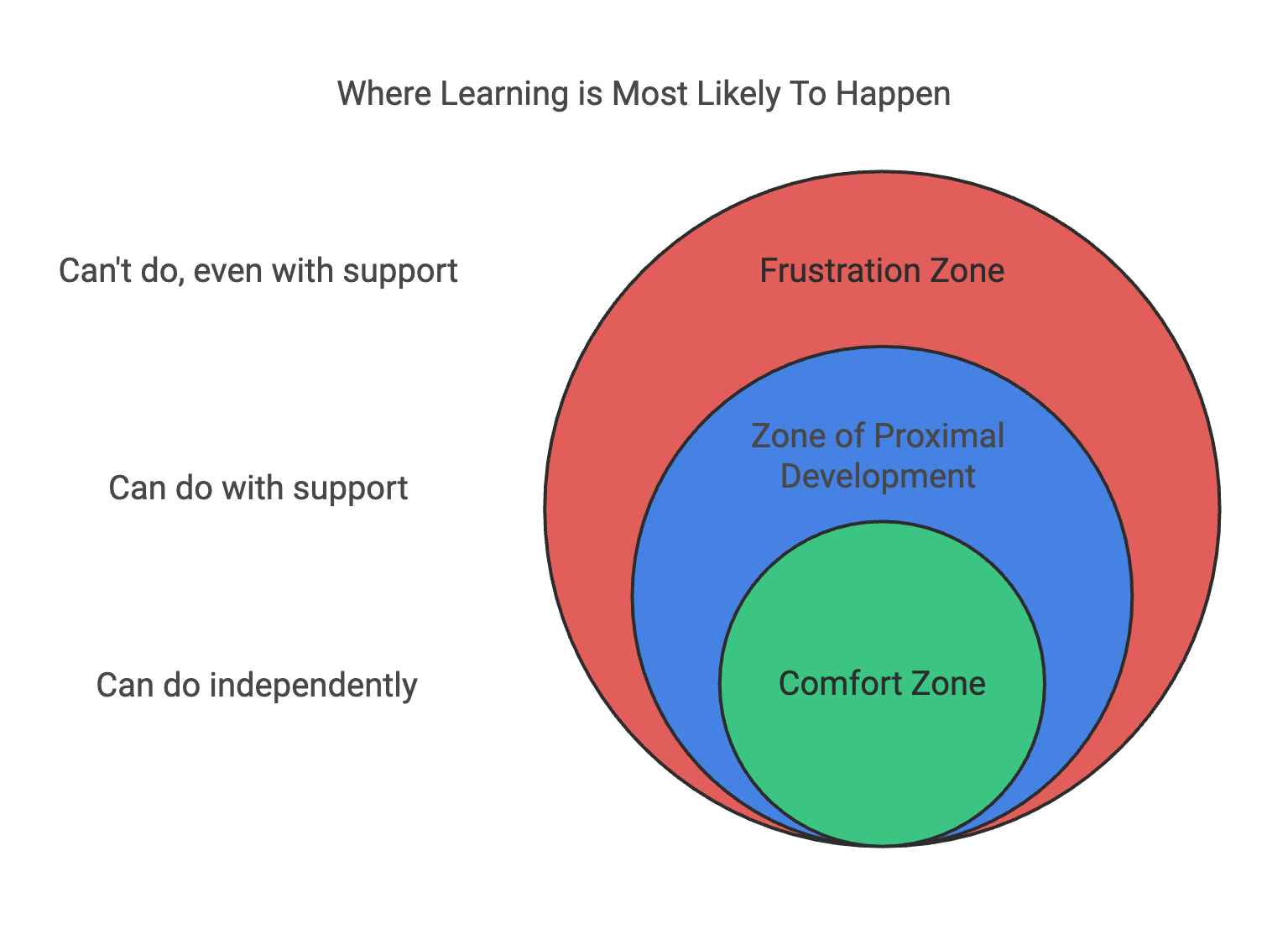
The more time you spend in the ZPD developing leadership capabilities, the more likely you are to unlock the career progression you want.
Intro
It is NOT:
- An objective measure of what you're good at.
- An objective measure of whether you're better or worse than someone else at something.
Scoring Legend
General Insights
Detailed Breakdown
Assessment Philosophy Reminder
The goal of these assessments is to surface what ENERGIZES you.
It is NOT.
- About whether you are "good" at something or not
- About whether you are "better" or "worse" than others at something
Think about your Strong geniuses like your dominant hand and your Lower geniuses like your non-dominant hand!
One-liner
Line
EXPLAINER
Generating explanation...
Social vs. Solitude
Balanced vs. Spiky
Genius Assessment
Work Assessment
Decision Making
DEFAULT MODE
SECONDARY MODE
MOST EFFORTFUL
In Practice
Percentile
Hobbies and Fun
Hobbies You Might Like
Expand All
WELL KNOWN
OBSCURE
Books You Might Like
WELL KNOWN
Loading book...
Loading book...
Loading book...
Loading book...
OBSCURE
Loading book...
Loading book...
Loading book...
Loading book...
Movies You Might Like
WELL KNOWN
Loading movie...
Loading movie...
Loading movie...
Loading movie...
OBSCURE
Loading movie...
Loading movie...
Loading movie...
Loading movie...
Songs You Might Like
WELL KNOWN
OBSCURE
These song recommendations are not based on feel/vibe, but on lyrics, so keep that in mind!
Thought Leaders You Might Resonate With
WELL KNOWN
OBSCURE
Roast Me
A roast is meant to be a playful exaggeration, not to be taken literally.
The roast emphasizes your genius results to the extreme and who you might be if you haven’t done any proactive improvement/development in your life.
A roast is meant to be a playful exaggeration, not to be taken literally.
The roast emphasizes your genius results to the extreme and who you might be if you haven’t done any proactive improvement/development in your life.
Your Career Motivators
Primary Motivators
- Meaningful Relationships
- Creative Autonomy and Expression
- Intellectual Challenge
Core Professional Edge
Your Edge
Ways People Might Misread You
Ideal Work Environment
Supercharge Your Trajectory
Expand All
Aspirational Careers
Note: These careers are not in any particular order and are meant to help broaden your mind about potential alternative careers.
Note: These careers are not in any particular order and are meant to help broaden your mind about potential alternative careers.
Expand All